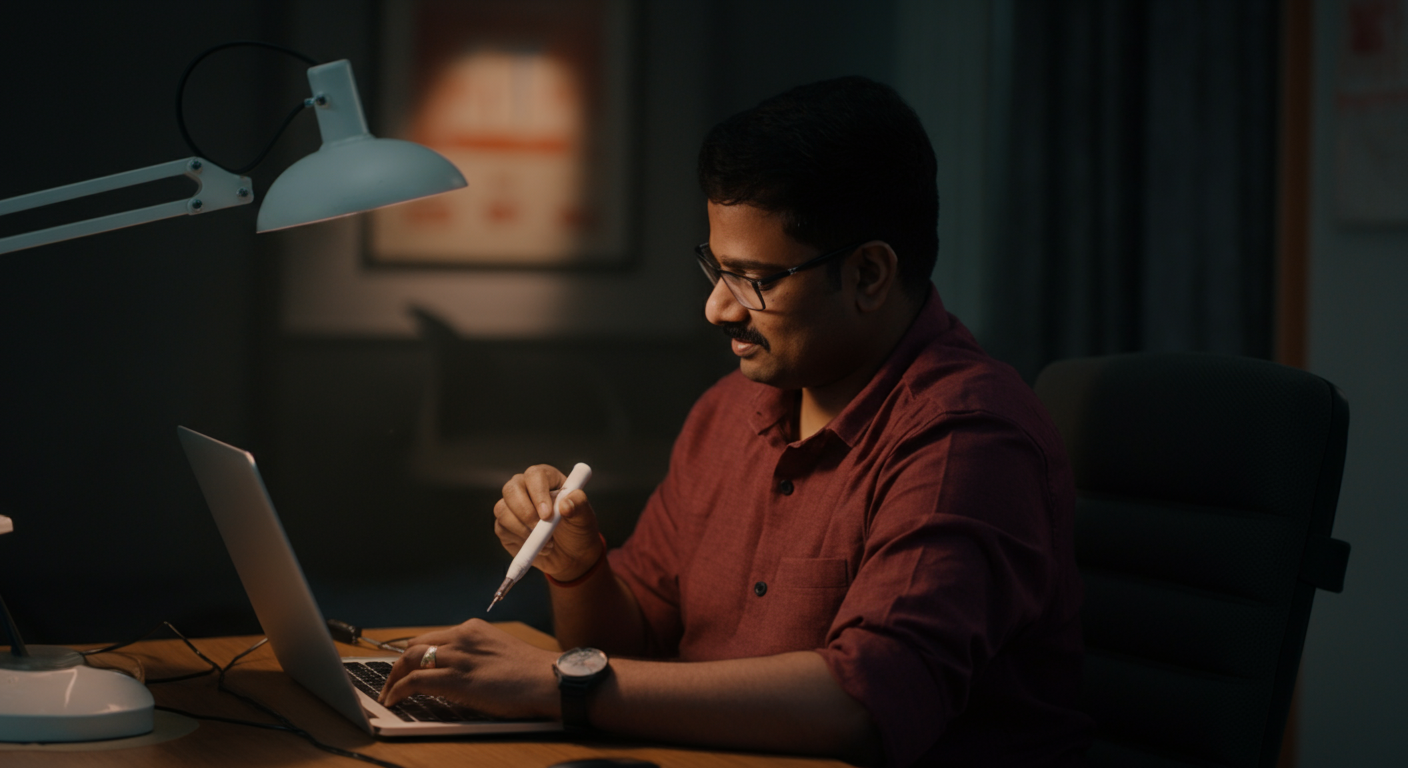
A specially-abled professional in India preparing for a job interview — from freshers to professionals with 5+ years of experience — who wants to walk in confident, prepared, and ready for anything the interviewer might ask.
You've secured an interview but anxiety is rising. You're unsure how to handle questions about your ability, whether to request accommodations, and how to shift the conversation back to your skills where it belongs.
A step-by-step interview preparation system covering research, story-crafting, ability-related Q&A scripts, accommodation requests, and post-interview follow-up — specific to the Indian hiring context.
Getting the interview is the first win. Now comes the part where your preparation separates you from every other candidate in the room — and this guide gives you a complete system to walk in ready.
India's job market interviews can feel like a test of everything at once: your technical knowledge, your communication, your cultural fit, and sometimes — unfairly — your ability profile. This guide arms you with frameworks for all of it.
Step 1: Research the Company Like a Consultant, Not a Candidate
Before you prepare a single answer, spend 90 minutes researching the company. Know:
- Their last three major news stories (acquisitions, product launches, leadership changes)
- Their stated values and whether they mention inclusion or diversity publicly
- The team you'd be joining — LinkedIn profiles of your potential manager and peers
- The company's position in its market: growing fast, stable, or under pressure?
- Any stated RPWD Act compliance or specially-abled hiring programme
This research does two things: it helps you tailor every answer to their specific context, and it signals to the interviewer that you take your work seriously. Candidates who reference specific company details stand out instantly in Indian interviews.
Step 2: Build Your STAR Story Bank
The STAR framework (Situation, Task, Action, Result) is the foundation of behavioural interview answers. Prepare at least six STAR stories from your experience — freelance work, internships, academic projects, volunteer roles, and NGO programmes all count.
For each story, prepare two versions: a 60-second version and a 2-minute version. Practice both out loud. Interviewers at Indian companies — especially in IT, BFSI, and manufacturing — rely heavily on behavioural questions.
Stories you should definitely have ready:
- A time you solved a complex problem independently
- A time you worked under a tight deadline and delivered
- A time you learned a new skill quickly
- A time you handled a conflict or difficult team situation
- A time you went above what was expected of you
- A time you failed, and what you learned
Notice: none of these prompts require you to reference your ability profile. That's intentional. Your STAR stories should be about your professional competence — which is why you're being interviewed.
Step 3: Prepare for Ability-Related Questions Confidently
Some interviewers will ask about your ability profile. Some will do it awkwardly. Some will ask questions that toe the legal line under India's RPWD Act 2016. Here's how to handle the most common ones:
"Can you tell us about your condition?"
What's happening: The interviewer wants to assess whether your abilities affect the role. They may not know a better way to ask.
Your response framework: Briefly acknowledge your ability profile, immediately pivot to what you can do, and optionally name any accommodation that would be helpful.
"I have [brief factual description]. In practical terms, what that means for this role is [what you can do fully]. The one accommodation that helps me perform at my best is [specific, reasonable request]. Beyond that, I'm fully capable of everything this role requires — as my track record shows."
"Will you need any special equipment or arrangements?"
What's happening: They're doing a cost-benefit calculation. This is your chance to make accommodation feel like a non-issue.
Your response: Be specific and reassuring.
"Yes, I use [specific tool — screen reader / ergonomic chair / captioning software]. It's already set up on my devices and requires no special infrastructure on your end. I've been using it professionally for [X] years — it's completely integrated into how I work."
"Are you comfortable working in our open-plan office?"
What's happening: A genuine environment concern.
Your response: Show you've thought about this.
"Open-plan environments work well for me. The one thing that helps is [headphones for focus / a designated quiet corner for calls / slightly adjusted lighting]. These are small things — I'm not looking for a separate setup, just the tools I already use."
Step 4: Request Accommodations Before the Interview, Not During
Requesting accommodations before the interview is not a disadvantage — it's professionalism. When you receive the interview invitation, reply with a single clear line:
"Thank you for the interview invitation. Could you please confirm [the format — video/in-person], and note that I would benefit from [specific accommodation — captions on video calls / interview questions sent 24 hours in advance / a ground-floor room]. Please let me know if you have any questions."
This approach does three things: it eliminates day-of stress, it demonstrates self-awareness and planning, and it gives HR time to prepare — making them more comfortable, not less.
Step 5: Master the Technical Round
For roles in IT, finance, design, or data — technical rounds are where the real selection happens. Prepare with the same rigour regardless of your ability profile:
- Developers: LeetCode / HackerRank problems at medium difficulty. Practice explaining your solution aloud as you code.
- Data professionals: SQL query practice, case study interpretation, Excel or Power BI scenario walkthroughs.
- Marketing: Campaign critique exercises — pick a brand's recent campaign and prepare a 5-minute improvement pitch.
- Finance: Ratio analysis, variance explanation, journal entry practice.
- HR and operations: Policy knowledge, case study responses, behavioural scenario role-plays.
If you need specific accommodations in the technical round (extended time, oral instead of written responses), request these explicitly when you accept the interview — not on the day. Most Indian companies with structured hiring will accommodate reasonable requests.
Step 6: Prepare Five Questions to Ask the Interviewer
Candidates who ask smart questions get remembered. Here are five questions that both impress and give you information you genuinely need:
- "What does success look like in this role in the first 90 days?"
- "What's the biggest challenge the team is working through right now?"
- "How does the team typically handle knowledge sharing and collaboration?"
- "What have previous people in this role gone on to do within the company?"
- "Does the company have formal inclusion or accessibility programmes I should know about?"
That last question is particularly powerful. It signals confidence, not desperation. It also gives you real information about whether this company will support you long-term.
Step 7: The Post-Interview Follow-Up That Gets You Remembered
Within 24 hours of any interview, send a follow-up email. Keep it to three sentences:
"Thank you for taking the time to meet with me today. I especially enjoyed our conversation about [specific topic they raised]. I'm very interested in the role and look forward to the next steps."
Fewer than 20% of candidates in India send follow-up emails after interviews, according to a 2024 Naukri survey. This single habit puts you ahead of the majority.
The Mindset That Wins Interviews
Here's the truth that the best interviewers know: the candidate who gets hired is not always the most technically qualified. It's the candidate who walked in believing they belonged in that room, who answered with specificity and confidence, and who made the interviewer feel comfortable picturing them on the team.
"I stopped trying to prove I could handle the job despite my situation. I started showing them exactly why my situation gave me an edge. That shift changed everything." — Marketing manager, Mumbai, hired through IMAbled
You bring capabilities that your peers without your experience cannot. The interview is your chance to make that visible. Prepare well. Walk in ready. The room is yours.