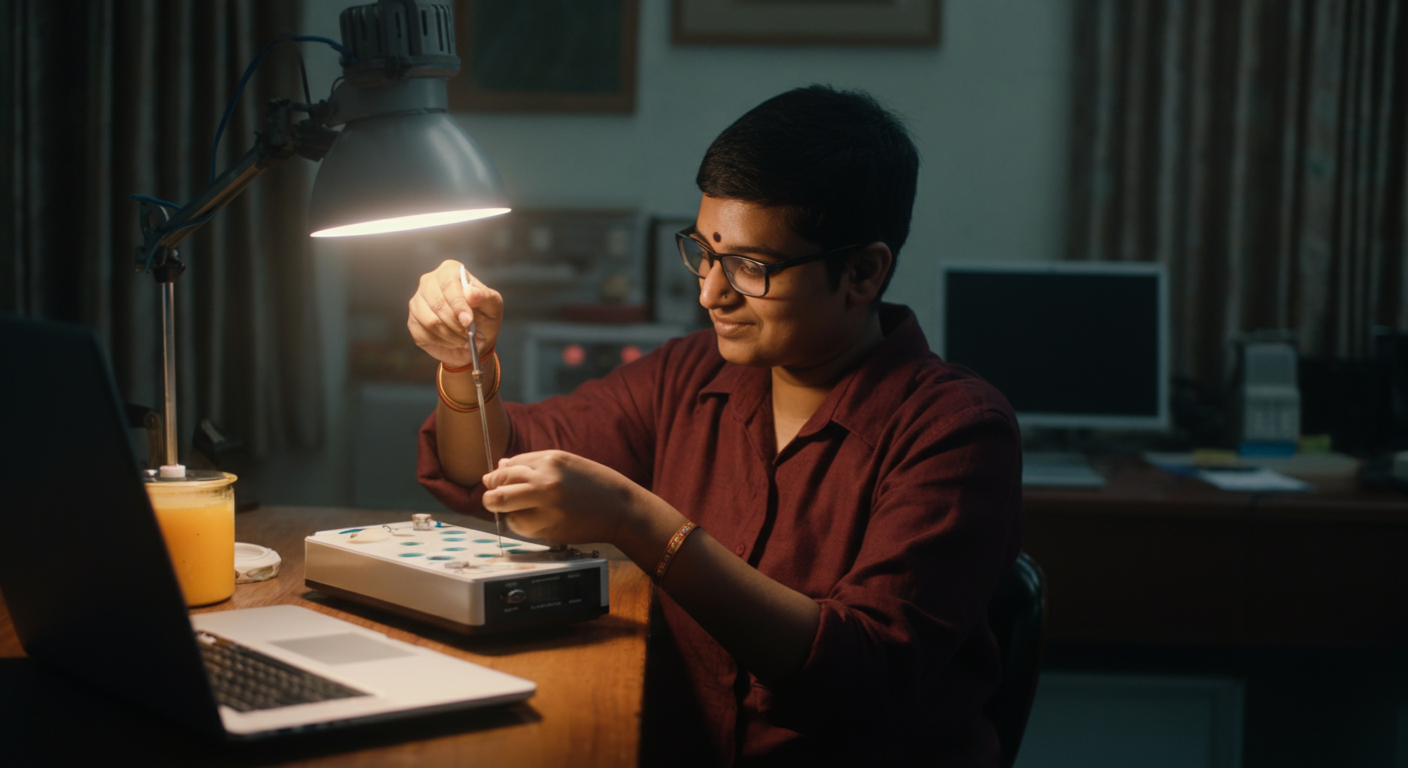
A specially-abled professional in India who is managing a career alongside the additional cognitive and emotional load of navigating inaccessible systems, workplace bias, and the pressure to perform exceptionally just to be treated equally.
The mental and physical load of being a specially-abled professional in India is real and rarely acknowledged. You're doing your job and simultaneously navigating systemic barriers your colleagues don't face — and that compound cost needs to be named, understood, and managed.
Practical strategies for energy management, boundary-setting, managing workplace stress, accessing mental health support in India, and building a sustainable career that doesn't require you to run empty.
There is a hidden cost that rarely gets discussed in career advice for specially-abled professionals: the cognitive and emotional load of navigating a world that wasn't built for you. Inaccessible systems. Assumptions that need to be corrected. Extra effort to get to a meeting room, access a digital tool, or make yourself understood in an environment that didn't account for your needs.
This load is real. It is on top of the normal demands of professional life. And it requires deliberate energy management — not just hard work and resilience — to build a career that doesn't hollow you out in the process.
Naming the "Double Load"
Research by the Centre for Disability Studies India (2023) found that specially-abled professionals spend an average of 45 additional minutes per workday managing accessibility barriers — finding workarounds, making accommodation requests, navigating non-compliant systems, and managing others' discomfort. Across a year, this is over 180 hours of extra cognitive and physical effort that non-specially-abled peers simply don't carry.
This is not a personal failing. It is a systemic reality. Naming it — clearly, without guilt — is the first step toward managing it.
Energy Management: Protecting Your Peak Hours
Your energy is not constant throughout the day — and for many specially-abled professionals, the distribution of peak energy may be different from the default 9-to-5 assumption. Identify your peak cognitive hours and protect them for your highest-value work.
Practical energy management strategies:
- Time-block your calendar: Mark your 2–3 peak hours as "deep work" blocks — no meetings, no interruptions. This is your most productive window; don't waste it on email or admin.
- Batch administrative work: Accommodation-related calls, emails, logistics — group these into one daily block rather than letting them interrupt your flow throughout the day.
- Negotiate meeting timing: Request that recurring team meetings be scheduled outside your documented peak hours. Most managers accommodate this with a clear, professional explanation.
- Build in recovery time: If commuting or navigating your environment is physically or cognitively costly, schedule buffer time after these activities — not back-to-back meetings with no recovery.
Setting Professional Boundaries Without Guilt
Boundaries are not selfishness. They are the infrastructure of sustainable performance. A professional who sets no boundaries — who always takes the extra call, always attends the after-hours event, always says yes to one more thing — burns out. Burnout does not serve your career, your employer, or your wellbeing.
Boundaries that specially-abled professionals often need to assert:
- "I am not available by phone after [time] — please message me and I'll respond during working hours."
- "I attend events where the venue is accessible. Please share venue details in advance."
- "I'll need the meeting materials 24 hours ahead — this is how I prepare for productive discussion."
- "I manage my energy carefully, so I may decline optional social events — this doesn't reflect my commitment to the work."
These are professional statements, not apologies. Professionals who communicate their operating conditions clearly are more effective, not less.
Recognising and Responding to Workplace Stress
The compounding of workplace stress and the additional load of accessibility navigation can lead to burnout faster than it would for peers without this added layer. Early warning signs:
- Persistent Sunday evening dread (beyond normal work week awareness)
- Difficulty concentrating on work that you normally handle easily
- Irritability or emotional dysregulation at work, especially in response to accessibility barriers
- Physical symptoms: persistent fatigue, headaches, or disrupted sleep not explained by your ability profile
- Feeling consistently undervalued regardless of your contribution
These signals require action, not suppression. Burnout ignored becomes burnout requiring months of recovery.
Accessing Mental Health Support in India
India's mental health infrastructure has grown significantly, and options exist at varying price points:
- iCall (TISS): Low-cost counselling by trained psychologists. Sliding fee scale. Online sessions available. icallhelpline.org
- Vandrevala Foundation: 24/7 helpline (1860-2662-345). Free. Available in multiple languages.
- Mpower: Professional mental health centres in Mumbai, Pune, Bengaluru. Structured therapy programmes.
- YourDOST, InnerHour, Lissun: Online therapy platforms with accessible pricing (INR 800–2,500 per session). Some offer text-based therapy which may be preferable for some specially-abled users.
- Company EAP (Employee Assistance Programme): Many large employers in India (Infosys, TCS, Accenture, Unilever) offer free confidential counselling through EAP programmes. Check with HR if your company has one — most employees don't know these exist.
Building a Support Network Outside Work
Peer support from others who understand the experience of navigating professional life as a specially-abled individual is valuable in a way that no mentor or manager can fully provide. Seek out:
- Online communities of specially-abled professionals on LinkedIn Groups, Facebook, and Discord
- IMAbled's community features connecting specially-abled professionals with peers
- NGO alumni networks from organisations that supported your career entry
- Disability-specific professional organisations (National Association of the Blind, All India Confederation of the Blind, Indian Deaf Foundation) have active professional networks
The Non-Negotiable Foundation
Your career is built on your physical and mental health. Every accommodation you request, every boundary you set, every support structure you build — these are investments in your capacity to perform, grow, and contribute at the level your talent makes possible.
"The most radical thing I did for my career was deciding that I would not sacrifice my health for productivity. Counterintuitively, that decision made me more productive." — HR Manager, Chennai
Your Action Step
Identify one energy drain in your current work life — one regular activity, environment, or obligation that consistently costs you more than it returns. Name one change you can make this week to reduce that drain: block the time, delegate the task, set the boundary, make the request. One change. This week. Your sustainable career starts there.