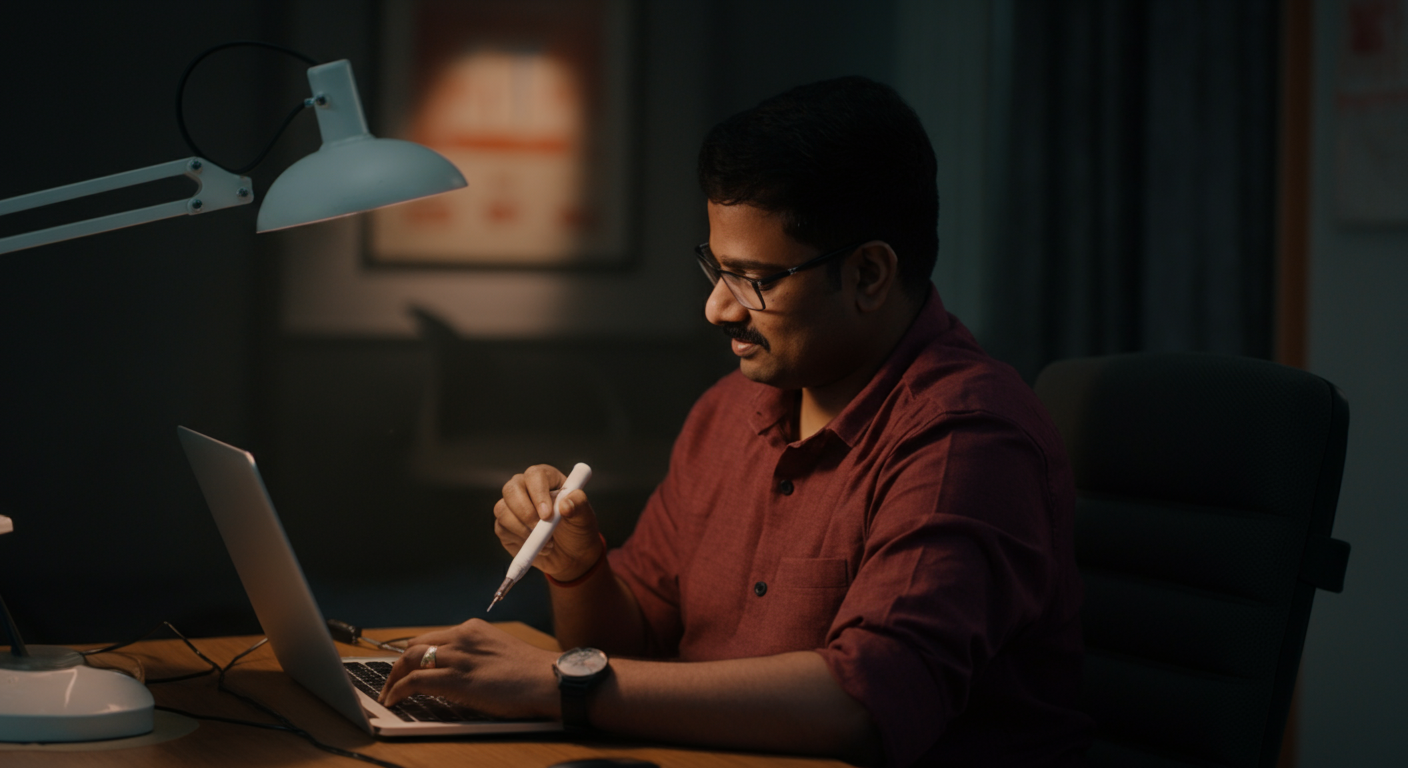
A specially-abled professional in India — any career stage — who wants to be recognised for their expertise, attract better opportunities, and control the narrative about who they are professionally.
Without a clear professional identity, opportunities come to you by chance — or not at all. A personal brand means that when the right opportunity appears, the right people already know who you are and what you bring.
A step-by-step personal branding framework: defining your expertise focus, building your content presence, becoming a known voice in your field, and letting your brand do the work of finding opportunities for you.
Personal branding is not self-promotion for its own sake. It is the deliberate practice of making your expertise visible to the people who need it — so that when the right opportunity appears, you don't have to fight for attention against a hundred other resumes. The right people already know who you are.
For specially-abled professionals in India, personal branding carries an additional dimension: it puts your expertise and capability in front of an audience before any assumptions about your ability profile can form. When a hiring manager reads your published LinkedIn article or watches your presentation, they have already formed an impression of your thinking. That impression is based entirely on your work.
Step 1: Define Your Expertise Focus
You cannot brand yourself as an expert in everything. The most effective personal brands are specific: you are the person known for one thing in one context.
Fill in this sentence: "I help [specific audience] achieve [specific outcome] through [specific expertise]."
Examples:
"I help fintech startups in India build WCAG-compliant digital products."
"I help HR teams design onboarding programmes that work for distributed teams."
"I help newly graduated data analysts in India transition into their first analytics role."
The more specific, the more memorable. Specificity does not limit your audience — it defines it, which is exactly what effective branding requires.
Step 2: Choose Your Content Platform
You don't need to be everywhere. Choose one primary platform and be consistent on it for 6 months before expanding:
- LinkedIn (best for B2B professionals, career topics, corporate audiences in India)
- Twitter/X (best for journalists, public policy, academia, startup ecosystems)
- YouTube (best for technical education, tutoring, software demonstrations)
- Substack (best for long-form writing, newsletter audiences, thought leadership)
- Instagram (best for visual fields — design, photography, fashion, food, art)
- Podcast (best for conversation-led expertise building, interview format)
Most specially-abled professionals in India see the strongest career return from LinkedIn — it is where Indian recruiters, inclusive hiring managers, and industry peers are most concentrated.
Step 3: Create Content That Demonstrates Expertise (Not Just Opinions)
The best personal brand content is not about you — it is about what you know. Content that teaches, explains, or demonstrates expertise builds authority faster than content that shares personal updates.
Content formats that build professional authority:
- How-to posts: Step-by-step explanations of how to do something in your field
- Case studies: "Here's a problem I solved and what I learned" (anonymise client details as needed)
- Perspective posts: Your informed take on an industry trend or news event
- Myth-busting: Common misconceptions in your field, corrected with evidence
- Data analysis: Finding a relevant dataset and drawing useful insights from it publicly
- Interview questions: Q&A with someone more experienced in your field
Content that builds personal brand as a specially-abled professional:
Sharing your experience navigating professional environments, career decisions, workplace accommodations, or the job market — from a place of strength and expertise, not complaint — builds a distinctive brand. You are not just a professional in your field. You are a professional who brings a perspective that most of your audience has never had access to.
This content resonates especially strongly with: HR and inclusion professionals building programmes, other specially-abled professionals looking for guidance, and companies seeking authentic voices on inclusion. All three groups represent career opportunities.
Step 4: Build Visibility Beyond Your Content
Content creation is one channel. Other visibility-building activities compound your personal brand:
- Speaking at industry events: Conference talks, panel participation, webinars. Start with smaller, accessible virtual events. Build toward in-person.
- Contributing to publications: Economic Times, YourStory, Inc42, Mint, and sector-specific publications accept opinion and expertise columns. Pitch a 700-word piece on a topic in your domain.
- Guest appearances on podcasts: Find 5 Indian podcasts in your sector. Reach out to offer yourself as a guest. Podcast audiences are highly engaged and loyal.
- Awards and recognition: Apply for industry awards, inclusion recognitions (NCPEDP Helen Keller Awards), and professional excellence programmes. External recognition amplifies your brand.
Step 5: Be Consistent and Patient
Personal branding is compounding, not immediate. The professionals with strong personal brands in India built them over 12–24 months of consistent, specific, quality content creation — not overnight. The investment is real, and so is the return.
A realistic timeline for LinkedIn personal branding in India:
- Month 1–2: Profile optimised, first 10 posts published, 100–300 new connections from target audience
- Month 3–4: First posts reaching 5,000–10,000 views. Occasional recruiter or opportunity inbound.
- Month 6: One or two significant opportunities (job offer, speaking invitation, collaboration) traceable to content
- Month 12: Recognised as a voice in your space within your niche. Multiple opportunities per month directly or indirectly linked to your brand
Your Action Step
Write your first content piece today. Choose one topic in your professional domain where you have a genuine point of view or a useful explanation to offer. Write 200–400 words. Post it on LinkedIn. Do not wait for it to be perfect — the first post is about breaking the inertia, not setting a standard. The habit is more important than the post. Start today.