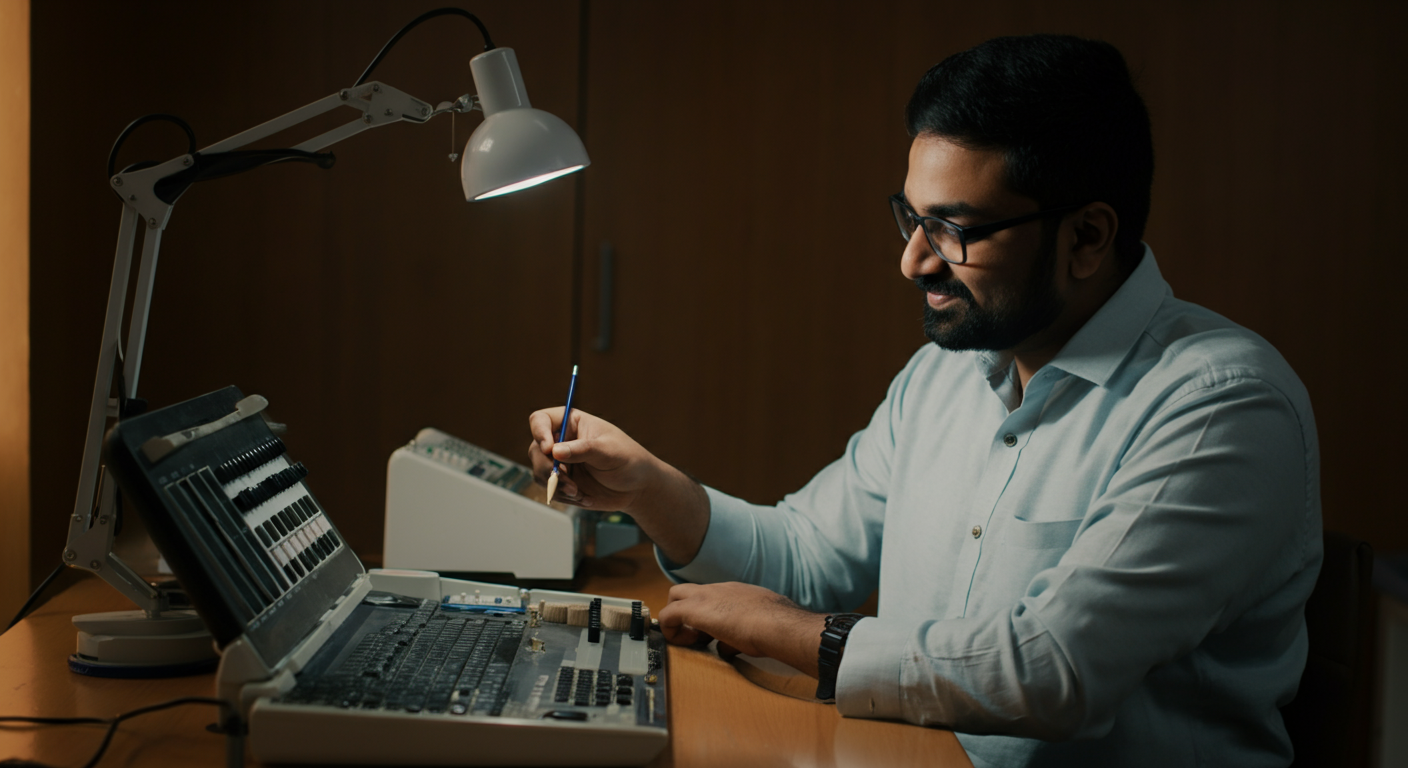
Specially-abled professionals with science, languages, data, or technology backgrounds looking to build meaningful careers in India's healthcare sector — and healthcare organisations and health tech companies seeking to build ability-inclusive teams.
India's healthcare sector employs over 7 million people and is growing at 22% annually. Most specially-abled professionals assume healthcare means clinical roles that require physical capability — but the majority of healthcare employment is in support, technology, documentation, and administrative functions that are fully accessible to professionals across all ability types.
This guide covers seven distinct healthcare career paths for specially-abled professionals — including medical transcription, health informatics, telemedicine support, patient experience, health tech product roles, and clinical research — with specific skills, certifications, salaries, and Indian companies hiring in each area.
Ability-First Roles in Healthcare India: Medical Transcription, Health Tech, and More
When people think of healthcare careers, they picture doctors, nurses, and ward staff. This framing excludes the majority of healthcare employment — and almost entirely excludes specially-abled professionals from considering the sector. The reality: healthcare is one of the world's largest service industries, and most of its employment is in documentation, data, technology, administration, and patient support — roles that require knowledge, precision, and communication skill, not specific physical configuration.
India's healthcare sector — worth over $372 billion in 2022 and growing at 22% annually — needs talent desperately across all of these non-clinical functions. It is one of the best opportunity sets available to specially-abled professionals in India today.
Medical Transcription: A Proven Entry Point
What Medical Transcription Involves
Medical transcriptionists (MTs) listen to audio recordings of physician dictation — consultation notes, discharge summaries, operative reports, radiology reports — and convert them to accurate written medical records. The work requires: excellent English listening or reading comprehension, knowledge of medical terminology, speed and accuracy in typing or editing AI-generated transcripts, and a high standard of confidentiality management.
Accessibility for Specially-Abled Professionals
Medical transcription is primarily an auditory and typing task — which means it is directly accessible to:
- Mobility-impaired professionals: Entirely computer-based, fully remote work, no physical activity requirements. One of the most established remote work fields in India.
- Blind and low-vision professionals: Audio transcription means listening is the primary task — screen readers are needed for navigating the transcription platform and editing text, but the core input is auditory. Many blind professionals have built successful MT careers precisely because listening is their primary information channel.
- Neurodiverse professionals: MT requires the sustained, systematic attention to detail and pattern recognition that many autistic and dyslexic professionals apply naturally.
MT is less suitable for deaf professionals — audio transcription is its core function. However, speech recognition-assisted transcription (editing AI-generated transcripts rather than live transcribing) is an emerging variant that reduces the audio dependence, making this evolving function more accessible.
India's Medical Transcription Industry
India is the world's largest medical transcription services provider to the US and UK healthcare markets. The sector is concentrated in Bengaluru, Hyderabad, Chennai, and Pune. Major employers:
- Nuance Communications India (Bengaluru, Hyderabad) — the global leader in healthcare voice and transcription
- Maxims Global (Mumbai)
- Transcend Services (Bengaluru)
- MedQuist India (now Nuance India)
- MedTrans (Hyderabad)
- SPi Healthcare (Delhi)
Qualifications and Training
A recognised MT certification improves hirability significantly. The AHIMA (American Health Information Management Association) Registered Health Information Technician (RHIT) is the gold standard internationally. In India, the Christian Medical College, Vellore offers a Medical Records and Health Information course. Several private training institutes in Bengaluru and Hyderabad offer MT-specific courses (6–12 months). Basic medical terminology can be learned through Coursera's Medical Terminology for Health Professions (free audit).
Salary range: Entry-level MT: ₹2–₹3.5 lakh/year. Experienced MT: ₹3.5–₹6 lakh/year. Senior MT / QA reviewer: ₹5–₹9 lakh/year. Most MT roles in India allow full remote work.
Health Informatics and Clinical Data Management
What the Field Involves
Health informatics is the management, analysis, and use of health data to improve healthcare delivery. Clinical data managers oversee clinical trial data. Health information analysts interpret patient outcome data. Hospital information system administrators manage digital health record systems. All of these are primarily computer and data-based roles.
The Role of Digital Health in India
India's Ayushman Bharat Digital Mission (ABDM) is creating a national digital health infrastructure — Unique Health IDs, electronic health records, and digital hospital systems. This is generating substantial employment in health data management, interoperability, and health information exchange — functions that require database skills, analytical thinking, and healthcare domain knowledge, not clinical training.
Employers and Roles
Hospitals with digital health initiatives (Apollo Hospitals, Manipal Health Enterprises, Fortis, Narayana Health) are hiring clinical data analysts and health IT specialists. Health tech companies (Practo, MediBuddy, HealthPlix, Niramai) hire product analysts, data scientists, and clinical content specialists. The National Health Authority (NHA) — the government body implementing ABDM — has ongoing requirements for health data professionals.
Key certifications: HIMSS Certified Associate in Healthcare Information and Management Systems (CAHIMS) — available in India. SQL and Python skills are directly applicable. A background in life sciences + data analysis is the ideal combination.
Salary range: Health data analyst: ₹4–₹8 lakh/year. Clinical data manager: ₹7–₹15 lakh/year. Health IT project manager: ₹10–₹20 lakh/year.
Telemedicine and Patient Support
The Telemedicine Opportunity
India's telemedicine sector exploded during the COVID-19 pandemic and has stabilised at a significantly higher level than pre-pandemic — the Ministry of Health reports over 100 million teleconsultations conducted through the eSanjeevani platform since its launch. Telemedicine platforms require: patient coordinators, appointment schedulers, medical record uploaders, and digital health assistants — all non-clinical support roles.
Written Patient Support
Digital health platforms (Practo, MediBuddy, 1MG, Netmeds) run customer support operations for patients — appointment booking, prescription queries, medication information, and claim assistance. These are written-channel support roles directly analogous to the BPO non-voice roles discussed in the BPO guide. Deaf and hard-of-hearing professionals, and those with mobility limitations, are well-suited to these roles.
Health Insurance Claims Support
Insurance TPAs (Third Party Administrators) — Medi Assist, Vidal Health, Star Health TPA, Heritage Health — process health insurance claims, pre-authorisations, and cashless hospitalisation requests. These are document-intensive back-office functions accessible to professionals with a range of abilities. Medi Assist has employed specially-abled professionals in their Bengaluru and Chennai operations.
Health Technology Product Roles
Product Management and UX in Health Tech
India's health tech sector employs product managers, UX researchers, UX designers, and product analysts — roles that are primarily desk-based and increasingly valued by global health tech investors. For specially-abled professionals with product thinking skills, health tech offers the added dimension of being able to contribute domain knowledge of accessibility and inclusive design from lived experience.
Several health tech companies specifically value accessibility expertise: Niramai (AI-based cancer screening), SigTuple (AI pathology), and Healthians (diagnostic services) are all building AI-assisted health products where someone who understands both AI and user experience across ability types is a valuable hire.
Regulatory and Quality Assurance in Health Tech
Health tech software must comply with CDSCO (Central Drugs Standard Control Organisation) regulations for software as a medical device, and international standards including ISO 13485. Regulatory affairs specialists and quality assurance engineers in health tech are in high demand and do structured, analytical work that is fully accessible via standard or adapted workstations.
Clinical Research and Pharmacovigilance
India is the world's largest clinical trial site (by number of trials). Clinical research organisations (CROs) — Quintiles India (now IQVIA), Covance, PRA Health Sciences, Syneos Health India — run operations in Hyderabad, Bengaluru, Mumbai, and Ahmedabad. Clinical research coordinators, data entry specialists for clinical trials, and pharmacovigilance case processors are all desk-based, documentation-intensive roles accessible to specially-abled professionals.
Pharmacovigilance (drug safety monitoring) is specifically worth noting as a high-growth BFSI-adjacent health field: processing adverse event reports, coding medical terminology, and writing safety narratives requires analytical attention to detail rather than clinical skills, and is a field where several Indian universities now offer specific postgraduate programmes.
Entry path: B.Pharm or B.Sc. Life Sciences + clinical research certificate (many institutes in Hyderabad and Bengaluru offer 3–6 month CRC certificates). Salary range: CRC entry level: ₹3–₹5 lakh/year. Pharmacovigilance associate: ₹4–₹7 lakh/year. Senior CRA: ₹8–₹15 lakh/year.
Finding Healthcare Roles as a Specially-Abled Professional
Healthcare organisations with active ability-inclusion programmes include Apollo Hospitals (Chennai, Hyderabad), Narayana Health (Bengaluru), and Fortis Healthcare (Delhi, Mumbai) on the hospital side. Health tech companies are generally more flexible — approach them directly through LinkedIn with a portfolio of relevant skills. Browse IMAbled's healthcare and health tech job listings for current openings. If you are an NGO supporting specially-abled professionals in health sector employment, IMAbled's NGO partnerships provide placement connection resources.
Frequently Asked Questions
Do medical transcriptionists in India work from home?
Yes, almost universally. Medical transcription is one of the longest-established remote work industries in India. Employers provide secure transcription software and encrypted audio files — the work is done at home on the employee's own schedule within agreed turnaround times. This makes it particularly accessible for professionals with mobility limitations or those in smaller cities without healthcare sector office presence.
Is clinical research accessible for wheelchair users?
Back-office clinical research roles (data entry, pharmacovigilance, regulatory documentation) are fully accessible and are typically office-based in CRO facilities. Clinical research coordinators who work on-site at hospitals may face physical access challenges depending on hospital infrastructure. Hybrid roles that combine on-site coordination with remote data management exist at some CROs and may be worth specifically seeking.
Can a deaf professional work in telemedicine support?
Yes — in digital channels (chat, email, app-based support). Telemedicine platforms that use only voice calls for patient support would not be accessible for deaf professionals on the voice side. However, platform support roles (technical help, appointment management, documentation) are largely text-based. Ask specifically about the communication channel mix when applying to telemedicine companies.
What medical terminology resources are best for entry into healthcare roles?
Coursera: "Medical Terminology for Health Professions" (free audit, 6 weeks). Khan Academy Medicine (free, broad medical science foundation). MedlinePlus Medical Encyclopedia (free reference tool). For MT specifically, the AHIMA Body of Knowledge (BOK) is the standard reference. Several YouTube channels by Indian medical education providers (Marrow, Dams) cover anatomy and physiology at a sufficient level for health informatics roles.
Are health IT roles accessible for professionals without a clinical background?
Yes. The skills that matter most in health IT — data management, interoperability standards (HL7, FHIR), software implementation, and user support — are learnable by any IT professional. The clinical domain knowledge can be acquired through self-study and on-the-job learning. HIMSS offers an entry-level healthcare IT certification (CAHIMS) specifically designed for IT professionals transitioning to healthcare — no clinical background required.