How a Wheelchair User Became One of India's Top Corporate Lawyers
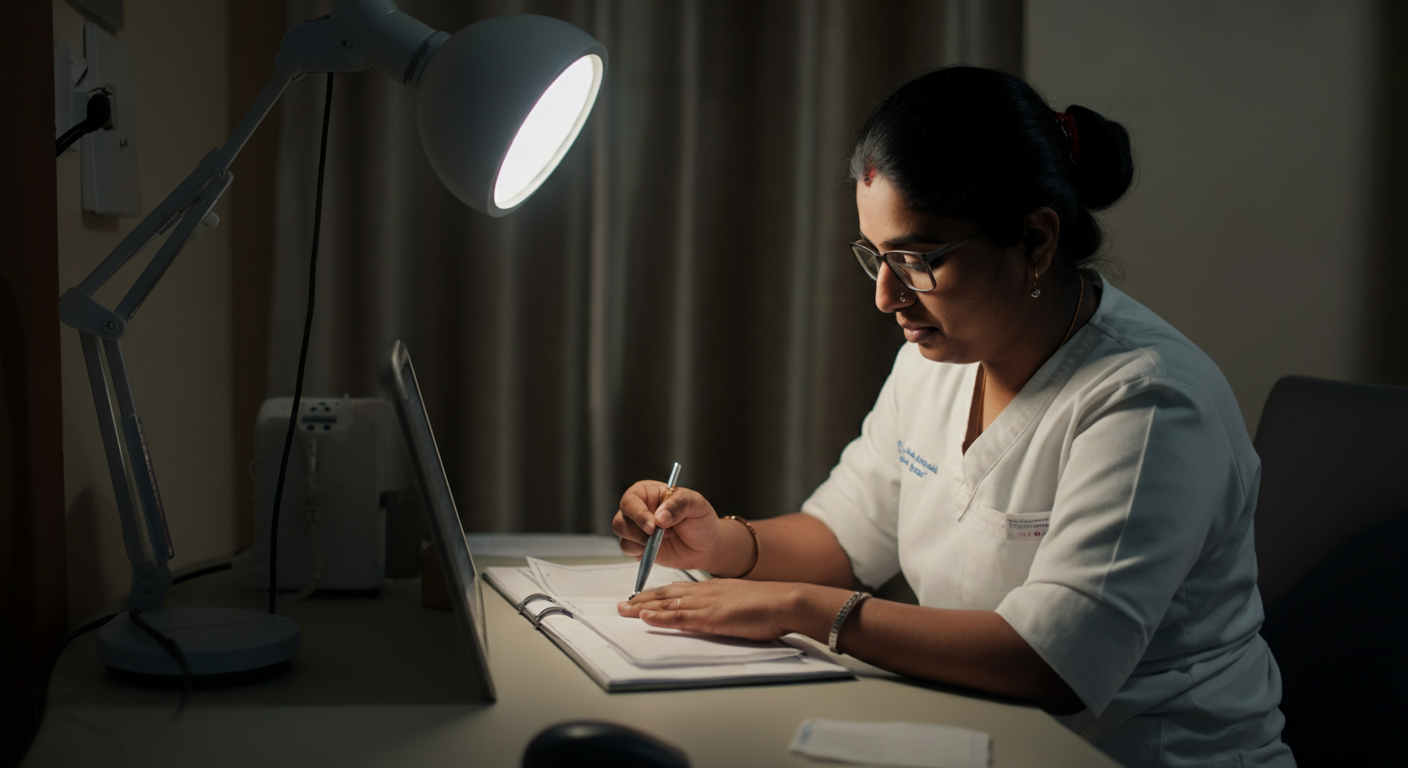
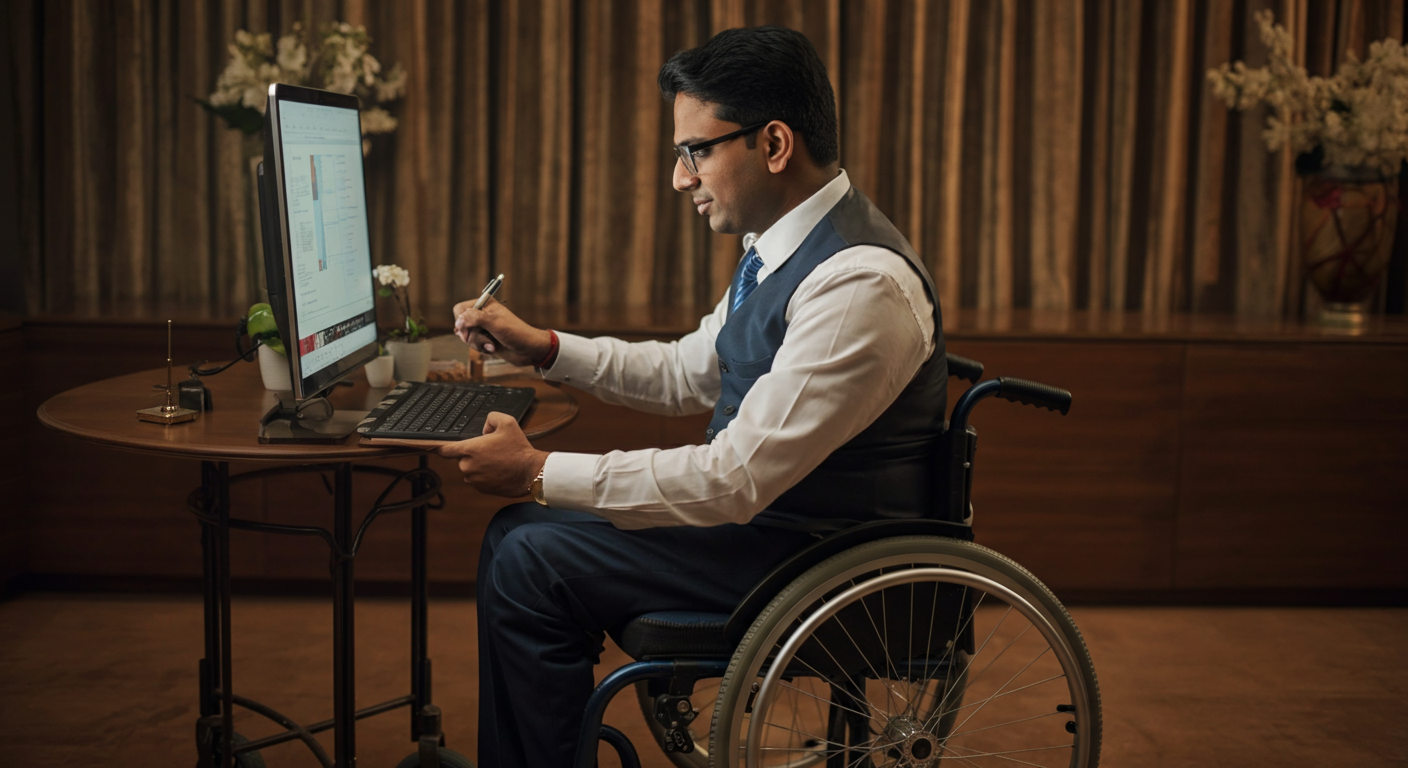
The Supreme Court of India's main building has steps at its entrance. Many district courts across the country still do not have functional ramps. Bar council exam centres have historically been inaccessible. And yet, Meera Pillai — a wheelchair user since age 11 following a spinal cord injury from a road accident — is a Senior Associate at one of Mumbai's top five corporate law firms, specialising in mergers and acquisitions, with a billing rate that puts her among the top 15% of lawyers at her level in the country. The story of this wheelchair user lawyer career in India is a testament to extraordinary personal capability — and an indictment of every institution that made the path unnecessarily harder than it had to be.
Meera, 36, completed her BA LLB (Hons) from NALSAR University of Law, Hyderabad — one of India's premier National Law Universities — with a gold medal in constitutional law. She joined a corporate law firm in Mumbai at ₹65,000 per month, was promoted to Associate within two years, and is currently the youngest Senior Associate in her firm's M&A practice. She earns ₹28 lakh per annum and is being considered for partnership in 2026.
The Barriers Were Real — and Mostly Institutional, Not Legal
Meera's first year of law school was a negotiation. NALSAR's older buildings did not have ramp access to all floors. The library's periodical section was in a basement. Some classrooms required climbing stairs. None of this was illegal under the laws that existed then. Most of it has since been corrected — partly because Meera, as a student, filed a formal accessibility complaint with the institution in her first semester, cited the relevant provisions of the (then-draft) RPWD Act, and attached a remediation plan she had researched herself.
"I studied law for many reasons," she says. "One of them is that knowing the law is the single most effective tool a specially-abled person can carry. You cannot deny someone access when they can cite exactly which statute you are violating."
The institution responded. By her second year, ramps had been added to three buildings, the library had an accessible lift installed, and a reserved accessible parking space had been painted at the main entrance. Meera had not even graduated yet, and she had already changed built infrastructure for every wheelchair-using student who came after her.
Corporate Law vs. Courtroom Practice: The Strategic Career Choice
Many lawyers assume the most prestigious path runs through the courtroom. Meera made a different calculation in her final year of law school: corporate law practice is almost entirely office-based. The work — drafting, reviewing, negotiating, advising — happens at a desk, on a screen, over phone calls and video conferences. The physical inaccessibility of courts, while a genuine barrier that must be fixed, is less relevant to the daily practice of corporate law than it is to litigation.
This was not a retreat. It was a strategic deployment of her abilities where they would face the fewest unnecessary barriers. "I am an excellent drafter. I am analytically sharp. I am a strong negotiator. None of those skills depend on being able to walk into a courtroom. Corporate law gives me a stage where my actual abilities are what matter."
The distinction matters for wheelchair-using law students mapping their careers: corporate law, IP law, regulatory compliance, legal technology, academic law, and legal publishing are all highly accessible practice areas. Litigation, while not impossible (and with the right firm support and accessible courts, increasingly practical), involves more physical infrastructure navigation.
Her Daily Practice — and How the Firm Made It Work
The office
Meera's firm occupies the 14th and 15th floors of a fully lift-accessible tower in Lower Parel. The building was already wheelchair accessible when the firm moved in four years ago — a factor the managing partner now says she considers in any future office lease. Meera's workstation is height-adjustable. A dedicated accessible toilet is on her floor. Client meeting rooms are reachable without stairs. These are not extraordinary provisions — they are building code requirements that were actually followed.
Travel and client meetings
Meera travels to client offices in a firm-provided accessible cab with boot space for her manual wheelchair. She pre-checks accessibility at client locations before visiting — most large corporate offices in Mumbai's BKC and Lower Parel business districts are accessible. For locations that are not, she runs the meeting remotely via video call, a practice that post-pandemic no client finds unusual. "COVID normalised remote for everyone. It made my working style the default."
Court appearances
Meera delegates courtroom appearances to junior associates and appears herself for depositions and hearings at venues she has pre-confirmed are accessible. She has developed a brief protocol — a standard email she sends to opposing counsel requesting a list of hearing locations in advance — that has never once been refused and has never once resulted in her being caught at an inaccessible venue.
The access gap in India's legal profession
A 2022 survey by the Centre for Law and Policy Research found that only 23% of district court complexes in India have fully functional ramp access, and fewer than 15% have accessible toilets. The gap is being addressed — the Supreme Court issued accessibility guidelines in 2021 — but progress is uneven. Meera's approach of choosing practice areas and employers where office accessibility is within her control is a pragmatic response to a systemic problem that is, correctly, being fixed at the policy level.
What Her Firm Did Right
Meera has had two employers since graduating. Her current firm, she is clear, gets it right. What that looks like in practice:
- Accessible office infrastructure — not as a favour; as a requirement built into lease criteria
- Flexible work arrangements — Meera works from home two days a week as a standing arrangement; she was offered this before asking
- Performance evaluation based on output — her utilisation rate (billable hours as a percentage of available hours) is among the highest at her level, which is what drives promotion discussions, not attendance patterns
- Zero comments on her mobility at any professional juncture — in eight years at the firm, not one performance review, client meeting, or partner discussion has included her wheelchair as a topic unless she raised it first
- Active advocacy support — the firm submitted a brief supporting accessible court infrastructure as part of a Supreme Court consultation; Meera helped draft it
Her Work to Change the Profession From Inside It
Meera sits on the Bar Council's working group on accessibility in legal education. She has published two papers on wheelchair accessibility in Indian courtrooms — both cited in subsequent High Court orders on the subject. She mentors four wheelchair-using law students through the IMAbled NGO partner network, guiding them through law school, clerkship applications, and firm interviews.
"I am changing two things at once," she says. "I am building my career. And I am making the path behind me smoother than the path I walked. Those are not separate projects."
For Wheelchair-Using Law Students and Professionals: Your Roadmap
- Choose your practice area strategically. Corporate law, IP, compliance, legal technology, and academia are high-value, high-growth areas where office accessibility — which you can negotiate — is the main variable. You are not limiting yourself; you are deploying yourself where your abilities create maximum value with minimum institutional friction.
- Know the RPWD Act and Bar Council rules cold. You are entitled to reasonable accommodation at law school, in bar exams, and in employment. Knowing this — and being willing to cite it precisely — transforms you from a petitioner into a peer in any accessibility negotiation.
- Evaluate firms on infrastructure before interviews. A site visit, a building directory check, or a direct question about office accessibility in the interview process tells you everything you need to know about a firm's culture. Firms that answer this question clearly and positively are the right environments.
- Find placements through IMAbled's job board. Pre-verified ability-inclusive employers mean you spend your energy on the work, not the gatekeeping.
"The law does not care whether you walk into the room or roll into it. What it cares about is whether you understand it. I understand it better than almost everyone I know." — Meera Pillai, Senior Associate (M&A), Mumbai
Frequently Asked Questions
Can a wheelchair user practise law in India?
Yes — the Bar Council of India has no provision barring wheelchair users from enrolment or practice. Hundreds of lawyers across India use wheelchairs or other mobility aids in active practice. Corporate law, IP law, compliance, legal research, and legal technology are particularly accessible specialisations. Litigation practice involves more physical infrastructure navigation but is not prohibited.
Are National Law Universities accessible to wheelchair-using students?
Accessibility varies significantly by campus. NALSAR (Hyderabad), NLSIU (Bengaluru), and NUJS (Kolkata) have made significant accessibility improvements in recent years. Most NLUs now have ramps, lifts, and accessible hostels — though you should contact the institution's student welfare office before applying to verify current infrastructure. The RPWD Act 2016 requires all educational institutions to provide reasonable accommodation.
What is the salary range for lawyers with physical abilities differences in India?
Salary in law is determined by practice area, firm tier, and performance — not physical presentation. At top-tier corporate firms in Mumbai and Delhi, junior associates earn ₹50,000–90,000 per month; senior associates earn ₹1.5–3.5 lakh per month. Partners earn significantly more. The legal profession, if you find the right environment, pays purely on merit and output.
What are a wheelchair-using lawyer's rights in Indian courts?
The Supreme Court of India issued accessibility guidelines in 2021 requiring all court complexes to comply with accessibility norms under the RPWD Act 2016. This includes ramp access, lifts, accessible toilets, and reserved seating in courtrooms. High Courts and district courts are implementing these at varying speeds. If you encounter an inaccessible court facility, you can raise the matter with the court registrar and cite the 2021 Supreme Court order directly.
How can law firms in India build more accessible workplaces for wheelchair-using lawyers?
The essentials are accessible office infrastructure (ramps, lifts, toilets), flexible remote work arrangements, height-adjustable workstations, and accessible transportation. On the culture side: performance evaluation based on output metrics, not physical presence or mobility patterns. For a full workplace accessibility checklist, visit IMAbled's employer resource hub.