Signing for Success: The Deaf Software Engineer Who Built an App Used by 2 Million People
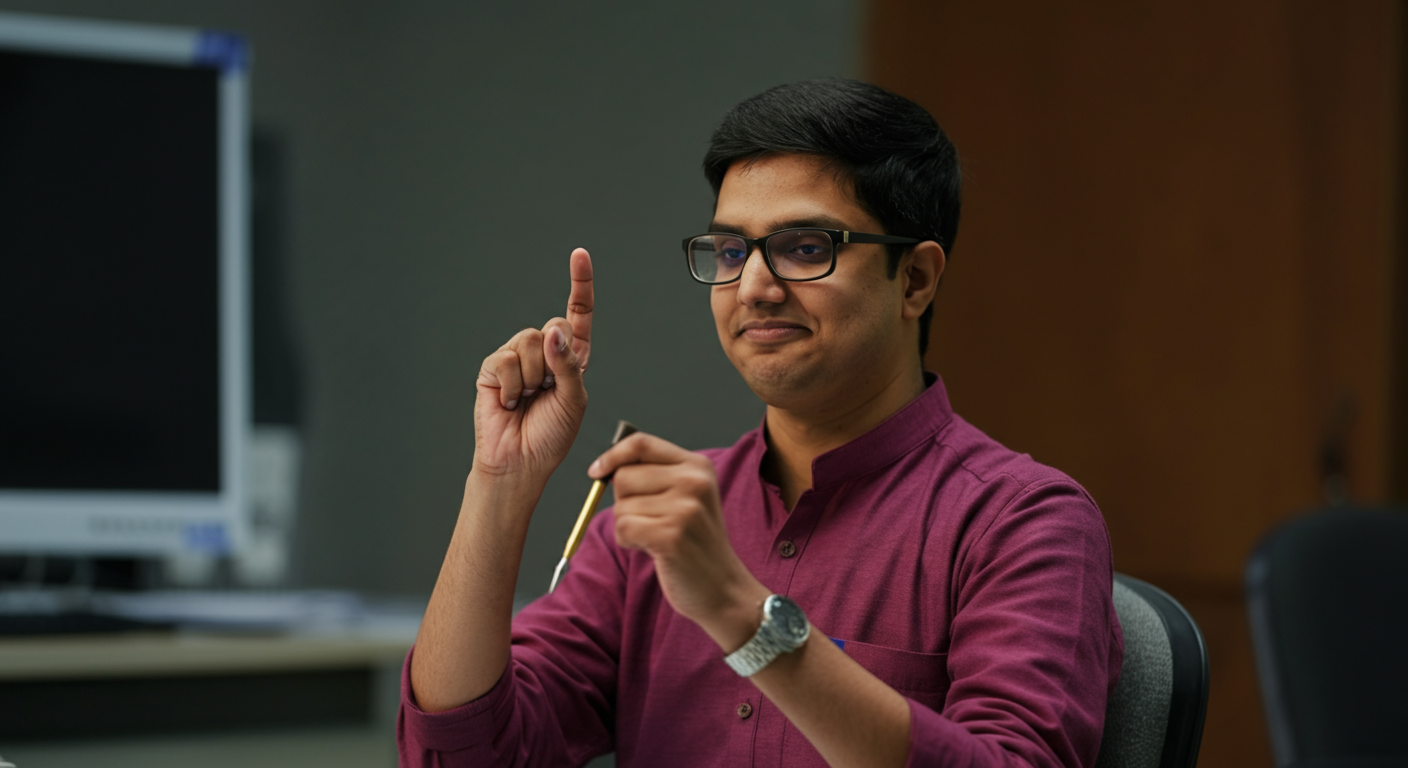
Karthik Suresh has never heard a line of code compile. He has never heard a standup meeting, a sprint retrospective, or a product launch call. What he has done is write the backend architecture for SignLearn — an Indian Sign Language learning app with 2.1 million registered users, a 4.8-star rating on both major app stores, and national press coverage including a feature in the Economic Times Tech supplement. The deaf software engineer India success story is, in Karthik's telling, not a story about overcoming deafness. It is a story about writing code, solving a problem he understood deeply, and building something that works.
Karthik, 31, is congenitally deaf. He grew up in Coimbatore, attended a school for the deaf through class 10, then integrated into a mainstream engineering college in Bengaluru for his BE in Computer Science. He graduated with a 8.4 CGPA. He was the only deaf student in his department. He was, by his professors' accounts, the student most likely to find a bug in the assignment specification before writing a single line of code.
The Myth That Software Engineering Requires Hearing
The assumption that software engineering is an auditory-heavy profession does not survive examination. Consider what an engineer actually does most of the time: reads documentation, writes code, reads code, debugs, writes tests, reads error logs, writes documentation. Every one of these tasks is visual and textual. The verbal components — standups, design discussions, code reviews — are communication about the work, not the work itself. And communication, as Karthik has demonstrated, has multiple excellent channels that do not require sound.
"Code is a language. I am fluent in six of them," Karthik says, through a note on his phone he holds up during the interview. "None of them are spoken languages. None of them need to be."
The Communication Systems That Made Karthik's Team Work
Text-first culture by design
When Karthik joined his first startup job in Bengaluru — a three-person team building a logistics SaaS — he proposed on his first day that all key technical decisions be documented in writing on Notion before implementation began. His argument was technical: written decisions create a searchable knowledge base, reduce misunderstandings, and make onboarding faster. His manager agreed. The written-first culture this created benefited every member of the team and has nothing specifically to do with deafness — except that Karthik knew from experience that verbal-only discussions were lossy and exclusionary.
Async communication as the default
Karthik's teams communicate primarily through Slack text, GitHub pull request comments, and Notion documents. Video calls happen, but with captions — Google Meet's live captioning is Karthik's standard tool. For complex technical discussions, he often requests a 24-hour async thread before a synchronous discussion, which typically results in the synchronous call being shorter or unnecessary. "My communication style makes teams more efficient. The written record means we do not have 'but I thought you said' arguments."
Live captioning as standard infrastructure
Google Meet auto-captions, Otter.ai for meeting transcription, and Microsoft Teams' live captions (which he uses with client teams on Teams) form his real-time communication infrastructure. For important in-person meetings, he uses an ISL interpreter — either provided by his employer or, when needed, sourced through an NGO partner. "Captioning has become normal. Post-2020, everyone uses it sometimes. I just use it always."
Pair programming via screen share and text chat
Karthik pair-programmes using VS Code Live Share with a Slack DM open in parallel. His pairs type their thinking rather than narrating it aloud. This, he notes, often results in more precise communication than verbal pair programming — when you have to type "I think this function should return early if the array is empty," you are thinking more carefully than when you say "yeah, let's add a check here."
Building SignLearn: When the Engineer Is Also the User
The idea for SignLearn came from a frustration Karthik knew intimately: there was no accessible, well-designed app for hearing people to learn Indian Sign Language. His deaf community was isolated from hearing family members, colleagues, and the public not because ISL is difficult to learn — it is not — but because no good learning tool existed in India's digital ecosystem.
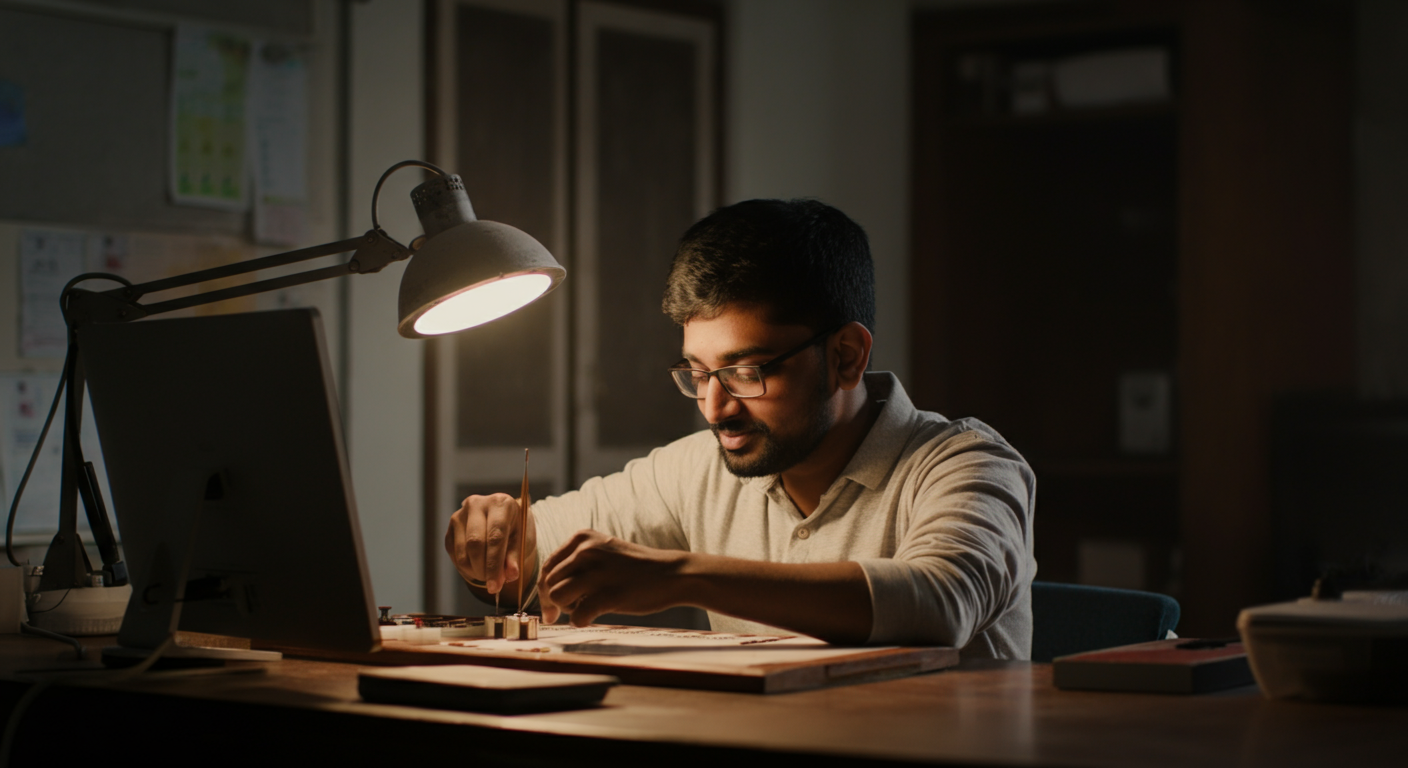
Karthik built the first version in three months of evenings and weekends while employed full-time. He was, unusually for an app developer, also the primary product tester: he knew exactly which sign demonstrations were accurate, which were wrong, which UI flows confused a learner, and which learning sequences were too slow. He was not just the engineer — he was the domain expert, the quality assurance lead, and the most demanding user on earth.
The app launched on the Play Store in 2022. It reached 100,000 downloads in two months, driven by organic sharing in deaf community groups and parent communities. By 2024, it had 2.1 million registered users, 87,000 monthly active learners, and a partnership with two state governments to include SignLearn in teacher training programmes for inclusive education.
The market he understood better than anyone else
India has approximately 63 lakh (6.3 million) deaf and hard-of-hearing individuals, according to the 2011 Census (the actual number is estimated to be significantly higher in 2025). ISL is one of the world's most complex and richest sign languages — yet as of 2022, there was no quality mobile learning tool for it. Karthik's lived experience of this gap was the product brief no market research report could have provided.
What Karthik Earns — and What the Market Pays Deaf Engineers
Karthik currently earns ₹42 lakh per annum as a Senior Software Engineer at a Bengaluru product company, plus equity in SignLearn (which he continues to run as a side venture). His compensation trajectory:
- First job (2016): ₹4.8 lakh per annum (3-person startup)
- Second job (2018): ₹12 lakh per annum (mid-stage startup, moved for the async culture)
- Third job (2021): ₹26 lakh per annum (product company with remote-first culture)
- Current role (2023): ₹42 lakh per annum (post-SignLearn recognition)
These numbers reflect Karthik's technical skills and output — not any premium or discount for his deafness. He competes in the same market, at the same compensation levels, as hearing engineers with equivalent experience. The gap, where it exists, is entirely an access problem: deaf engineers who cannot navigate inaccessible interview processes or workplace communication cultures are underrepresented in high-compensation tech roles. Platforms like IMAbled's job board exist specifically to close this access gap.
The Employers Who Got It Right — and What Made Them Different
In his career, Karthik has worked with four employers. Two were genuinely good at inclusion (he stayed at both for more than two years). Two were not (he left both within 18 months). The difference between the good and the bad:
- The good ones defaulted to text — their culture was already documentation-first, which meant Karthik was not requesting a special accommodation; he was working in the native medium
- The good ones evaluated on code quality, not meeting presence — performance reviews at both good employers were grounded in GitHub contribution data, code review quality, and project delivery, not "how he presented in the all-hands"
- The bad ones confused communication style with capability — one manager specifically noted in a review that Karthik "does not contribute vocally in meetings," which was technically true and professionally irrelevant; the actual question was whether his code worked, which it did, consistently, at a high level
For deaf engineers evaluating companies during interviews: ask about communication culture. "Is your team more async or sync?" and "Where does your team write down technical decisions?" are questions any good engineering candidate should ask — and the answers reveal immediately whether your working style is a fit or a friction point.
Your Roadmap as a Deaf Software Engineer in India
- Target async-first companies. Remote-first and product-led companies in India's tech sector have built text-first cultures by necessity. Startups in Bengaluru, Hyderabad, and Pune that are remote or hybrid are your highest-fit employers. Browse ability-inclusive tech employers on IMAbled's job board.
- Install your captioning stack before Day 1. Google Meet auto-captions, Otter.ai, Microsoft Teams live captions — have these ready and frame them to your manager as productivity tools, not accommodations. "I use Otter.ai for all meetings so I have a searchable transcript" is a thing many hearing engineers also wish they did.
- Build for your community. Like Karthik, you understand a user problem more deeply than any hearing developer could. The deaf and hard-of-hearing market in India is underserved by technology — the apps, tools, and services this community needs largely do not exist yet. Your engineering skills plus your lived domain knowledge is a genuine competitive moat.
- Let your GitHub do the talking. An active, well-maintained GitHub profile with quality code, clear commit messages, and good documentation is your most effective interview tool. It speaks fluently in the only language that matters in hiring decisions: professional output.
"Two million people have learned to say 'hello' in ISL because of something I built. I have never heard any of them say it. And I have never been happier." — Karthik Suresh, Senior Software Engineer and creator of SignLearn
Frequently Asked Questions
Can a deaf person become a software engineer in India?
Absolutely. Software engineering is fundamentally a visual and textual discipline. Writing code, reading documentation, debugging, and designing systems are all non-auditory tasks. The communication components of software engineering — standups, design reviews, code walkthroughs — are well-served by text-based tools, live captioning, and ISL interpretation. Hundreds of deaf engineers work at Indian tech companies at all seniority levels.
What tools do deaf software engineers use to participate in team meetings?
Google Meet's live captioning (free, accurate, and available in India), Otter.ai for meeting transcription and search, Microsoft Teams live captions, and Slack text channels for async communication. For complex in-person discussions, ISL interpreters can be arranged through NGO partners or specialist interpreter services. Many deaf engineers also standardise their teams on written-first communication protocols that benefit the whole team.
Which tech companies in India hire deaf software engineers?
Companies with remote-first or async-first cultures are the most accessible — including many mid-stage Bengaluru and Hyderabad startups. Larger companies including Infosys, Wipro, and Accenture India have formal deaf-inclusion programmes. Product companies that do their hiring via GitHub portfolio review or technical assessments (rather than phone screens) are naturally more accessible. Find verified inclusive tech employers on IMAbled's job listings.
How should a deaf engineer handle technical phone screens and interviews?
Request a text-based or video-captioned interview format when confirming the interview. Most technical interviews can be conducted via video with captions enabled, or via a shared code editor with text chat. Frame this as a communication preference when requesting it. Companies that cannot accommodate a text-based technical interview are, practically speaking, not good cultural fits for a deaf engineer's long-term career.
How can deaf professionals in India connect with tech job opportunities?
IMAbled's job board lists technology roles at verified ability-inclusive employers. NGO partners in the IMAbled network also provide placement support, skills training, and employer introductions for deaf tech professionals. Additionally, deaf developer communities on Twitter/X, LinkedIn, and dedicated Slack groups (search "Deaf in Tech India") are active networking spaces where job referrals circulate regularly.