The Power of Stillness: How an Epilepsy Warrior Built a Mindfulness App
When Nisha Kapoor was diagnosed with focal epilepsy at 27, her neurologist gave her three pieces of advice: manage stress rigorously, maintain regular sleep, and avoid fluorescent lighting where possible. Her response was to build a company whose entire purpose is helping people do exactly those things — a mindfulness and sleep management app called StillPoint, which now has 380,000 registered users, ₹2.3 crore in annual recurring revenue, and a partnership with two corporate wellness programmes at Bengaluru tech companies. The story of this epilepsy entrepreneur India tech career is not a story about overcoming a condition. It is a story about a founder who understood, from the inside, what her users needed — and built something that served them and herself simultaneously.
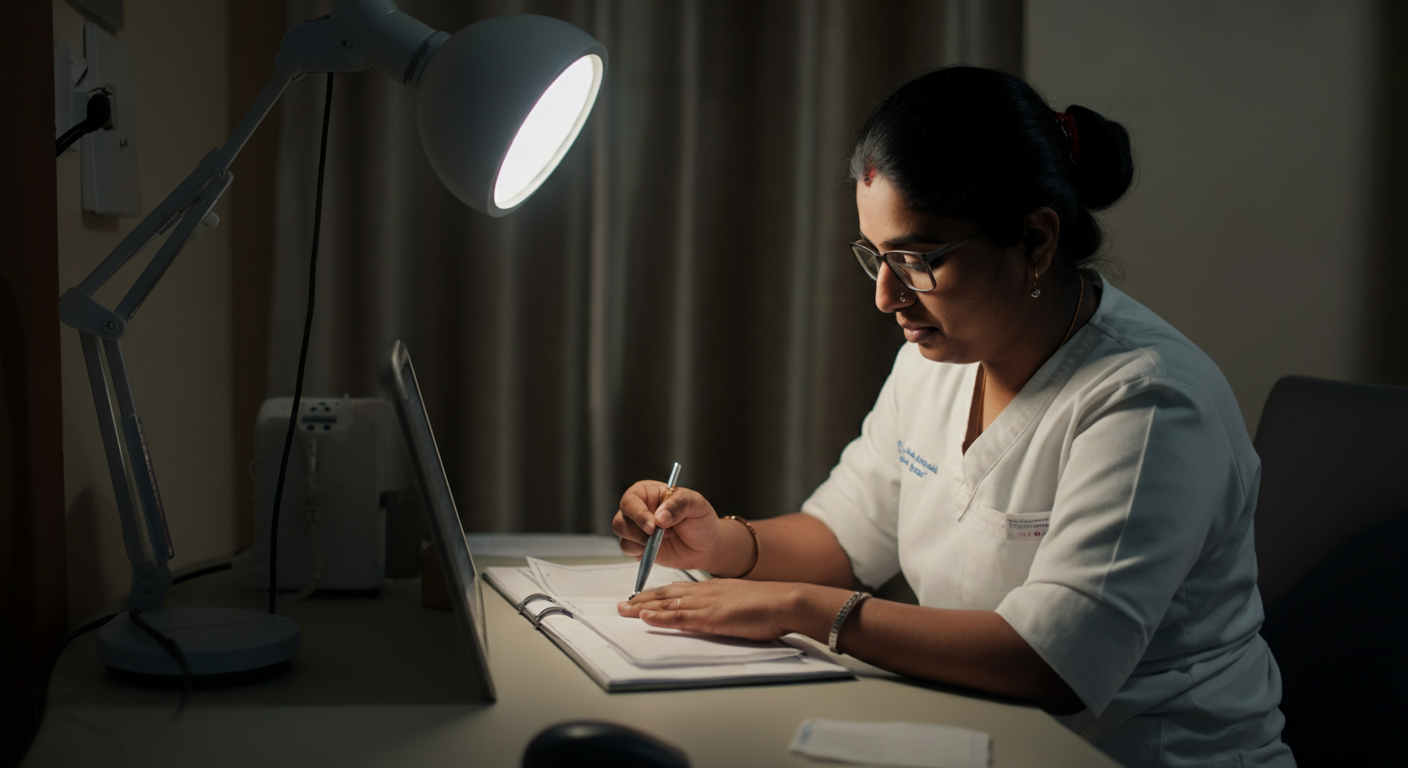
Nisha, 33, runs StillPoint from her home office in Bengaluru, with a remote team of seven people across product, engineering, content, and customer support. Her seizures are currently well-controlled with medication but were more frequent in her first two years post-diagnosis — a period during which she also built the app's initial version, raised a ₹60 lakh seed round from an angel investor, and onboarded her first 50,000 users. She did all of this while building the most epilepsy-informed work environment she could design — because the person whose wellbeing most depended on getting that environment right was herself.
The Insight That Became a Business
After her diagnosis, Nisha went looking for a digital tool that understood the specific relationship between epilepsy and stress, sleep, and sensory triggers. She found meditation apps built for generic wellness, sleep trackers that counted hours without understanding quality, and seizure tracking apps that were clinical and cold. Nothing understood the experience of managing epilepsy as a life — the exhaustion of constant vigilance, the grief of lifestyle constraints, the need for a mindfulness practice that was specifically designed around neurological sensitivity.
She built it herself. Not because she was a founder first and foremost — she had been a UX designer at a Bengaluru product company for four years — but because the problem was urgent and the solution did not exist. "I built StillPoint because I needed it. That is the cleanest possible product brief. I knew every user journey intimately, because I was every user."
StillPoint's Product — and How Her Experience Shaped Every Feature
StillPoint's core product is a mindfulness app with three features that no competitor had built when she launched in 2021:
- Seizure-safe content settings — all animations are slowand gentle, no flashing or rapid visual changes; this was designed for epilepsy users but is universally preferred by migraine and anxiety users as well
- Neurological wellness tracking — not just mood and sleep, but sleep architecture estimates, stress event logging, and pattern recognition that helps users (with or without epilepsy) identify their personal wellness triggers
- Recovery mode — a post-seizure (or post-panic, post-migraine) content mode that guides users through grounding exercises specifically designed for post-ictal states, with input from a neurologist and a clinical psychologist in her advisory network
These features were not focus-grouped into existence. They were lived into existence by a founder who knew exactly what was missing — because she had experienced the absence herself.
The market she understood best
India has approximately 1.2 crore (12 million) people with epilepsy — one of the highest absolute numbers of any country in the world. The global mindfulness app market is projected to reach $9 billion by 2027. The intersection — neurological wellness technology specifically designed for sensory-sensitive users — is a genuinely underserved niche that Nisha identified through lived experience and is now building a business from. Her user retention rate (62% at 90 days) is significantly above the industry average of 38% for wellness apps, because her product was designed by someone who understood the problem at the level of daily life.
The Work Structure Nisha Built for Herself — and Her Team
Remote-first, async-first
StillPoint has been fully remote since founding. This was not a pandemic response — it was a conscious design choice. Remote work eliminates commuting (a significant seizure risk for someone whose triggers include fluorescent transport lighting and fatigue), allows rest without stigma, and enables Nisha to work from the environment she has optimised for her neurological wellbeing.
No fluorescent lighting
Her home office uses natural light and warm LED alternatives. All-hands video calls are limited to one per week, kept under 45 minutes, and always have the option of audio-only participation — a policy that started as an accommodation for her own fatigue management and is now universally appreciated by her team as a normalisation of flexible presence.
Protected recovery time
Nisha's calendar has "closed" periods built in after any high-stress event (investor meetings, user research sessions, major product launches). These are non-negotiable, treated by her team the same way they treat any other calendar block. "I taught my team that recovery time is production time. It is how I stay well enough to keep building. They have all adopted similar rhythms for their own wellbeing."
Transparency without over-disclosure
Nisha is open with her team and investors about her epilepsy — partly because her company's product is literally built on this foundation, and partly because she has found that transparency eliminates the anxiety of concealment, which is itself a seizure trigger. Her investors know. Her co-founders know. Her customers know — she has written publicly about her diagnosis in the StillPoint blog. This transparency has not cost her investment or users. It has built trust and authenticity that her competitors, whose founders do not live the problem, cannot manufacture.
Navigating the Investor Landscape With Epilepsy
Nisha raised her seed round nine months after diagnosis. She disclosed her epilepsy to her lead investor (a Bengaluru-based angel with a background in healthcare technology) and found, counter to her fears, that the disclosure was received as a product credential rather than a risk factor. "He said: 'You understand your users because you are one. That is usually worth 18 months of user research.' That was the most accurate description of my competitive advantage I have ever heard."
Not every investor will respond this way. She had one investor meeting where the first follow-up question was about her "capacity to manage the stress of a startup" — a question clearly motivated by the disclosure, and a question she answered by pointing to her current ARR, team size, and runway management. "The answer to 'can you handle the stress?' is always the same: look at what I have built. That is the answer."
For Professionals With Epilepsy: Building a Career That Works
- Design your work environment before you accept any role. Remote work, flexible hours, sensory-controlled environment, and the ability to rest without stigma are not luxury requests — they are the conditions under which you produce your best work. Negotiate them upfront, or build them as a founder.
- Your lived experience is a product credential. If you are building for users who share your experience, you have a research and empathy advantage that no competitor can replicate. That is a business moat worth communicating explicitly to investors, partners, and users.
- Find employers who understand flexible presence. Ability-inclusive companies with remote-first policies and output-based performance evaluation are your highest-fit environments. Browse them on IMAbled's job board.
- Connect with the entrepreneurship support ecosystem. The IMAbled NGO partner network includes organisations that support specially-abled entrepreneurs with funding navigation, mentoring, and business development. Several government schemes under MSME and NHFDC support entrepreneurship for specially-abled founders.
"I built the product I needed. I built the company I needed. I built the work life I needed. If you have epilepsy and you are looking for someone who understands — you found her. And she is doing well." — Nisha Kapoor, Founder, StillPoint
Frequently Asked Questions
Can someone with epilepsy run a startup or have a demanding tech career in India?
Yes — epilepsy's impact on career is primarily a function of seizure control, work environment design, and stress management, not capability. With well-managed epilepsy (achieved through medication, lifestyle, and trigger avoidance), many professionals with epilepsy hold demanding roles across technology, entrepreneurship, finance, and creative industries. Remote work has significantly expanded the accessible career landscape by enabling environment control.
What workplace adjustments help professionals with epilepsy perform at their best?
The most effective adjustments: remote or hybrid work to control sensory environment and eliminate commuting; flexible hours to protect sleep schedules (a key seizure trigger when disrupted); natural or warm LED lighting instead of fluorescent; documented emergency protocols shared with close colleagues; and the ability to take recovery time after seizures without stigma or disciplinary consequence. Under the RPWD Act 2016, epilepsy qualifies as a specified condition for reasonable accommodation purposes.
Should a professional with epilepsy disclose to their employer?
Disclosure is a personal decision with practical implications. Disclosure enables reasonable accommodation requests and legal protection under the RPWD Act. Non-disclosure avoids potential stigma but also means your accommodation needs may not be met. Many professionals with well-controlled epilepsy choose selective disclosure — informing a direct manager and HR, but not wider colleagues — to access support without unnecessary exposure. Employers with documented inclusion commitments, found through IMAbled's job board, typically handle disclosure with appropriate confidentiality.
What funding is available for specially-abled entrepreneurs in India?
The National Handicapped Finance and Development Corporation (NHFDC) offers term loans and microfinance for specially-abled entrepreneurs. Several state governments have dedicated funds (Maharashtra, Karnataka, and Tamil Nadu have the most active programmes). The Startup India scheme does not specifically exclude specially-abled founders and several have received DPIIT recognition. Some angel networks in Bengaluru and Mumbai specifically fund founders from underrepresented backgrounds including specially-abled entrepreneurs.
Are there legal protections for employees with epilepsy in India?
Yes — epilepsy is included in the list of specified conditions under the Rights of Persons with Disabilities Act 2016. Employees with epilepsy are entitled to reasonable accommodation, protection against discrimination in hiring and promotion, and the grievance mechanisms provided under the Act. Employers of 20 or more people are required to have an equal opportunity policy and a designated officer to handle disability-related complaints. For specific guidance, consult the RPWD Act text or reach out through IMAbled's NGO partner network.