How a Blind Musician Became the Chief Audio Engineer at a Delhi Production House
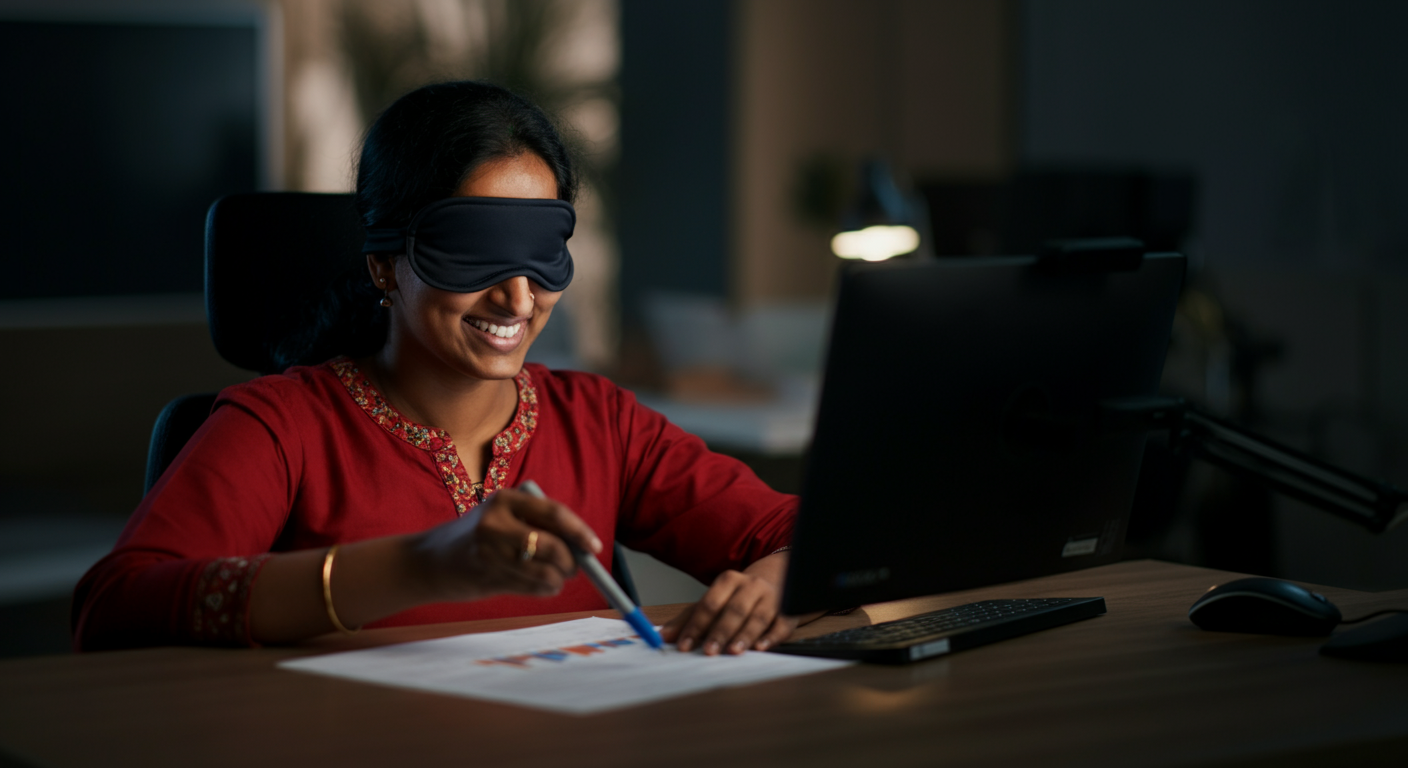
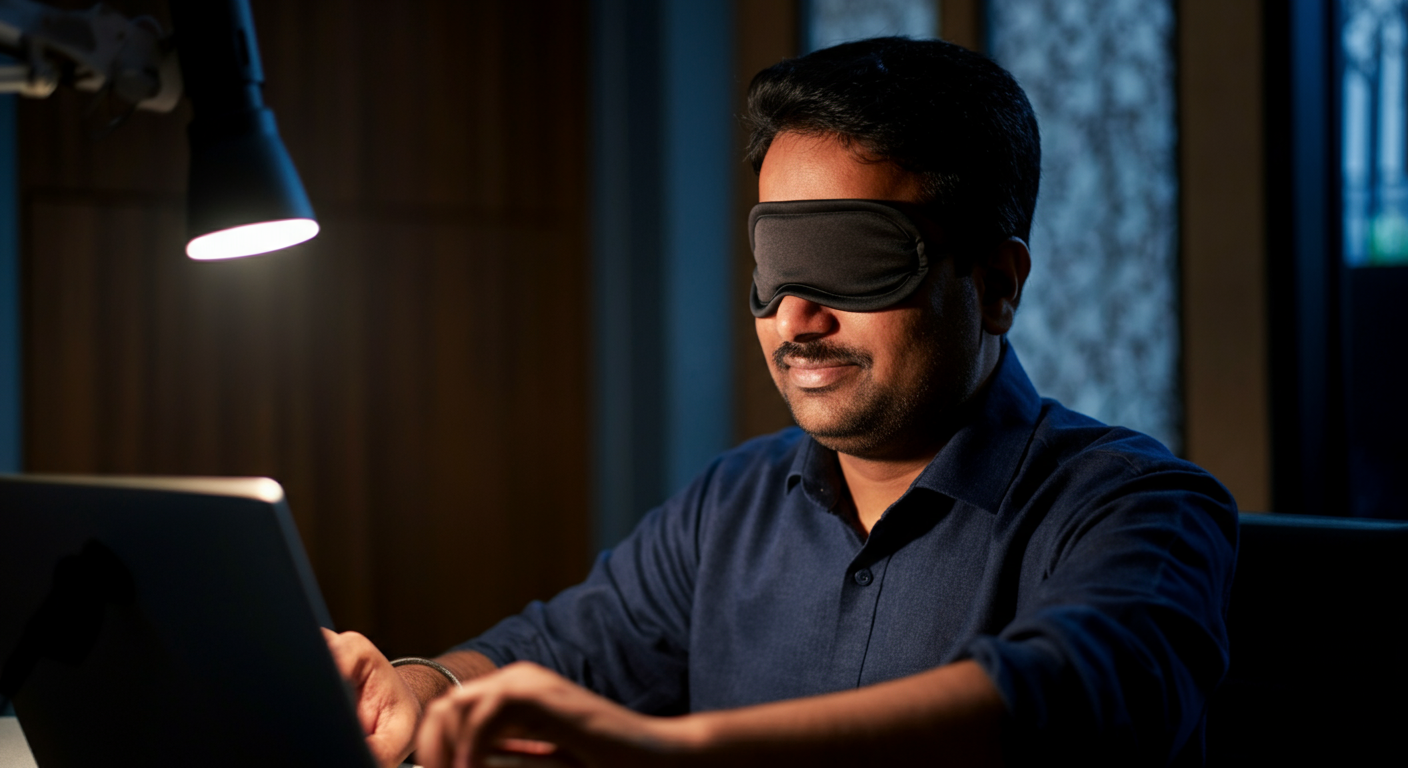
Rahul Bose hears things that other engineers reach for plugins to find. He hears the slight pre-ringing on an overcompressed snare drum before the meter shows clipping. He hears when a vocal take is emotionally true and when it is technically correct but emotionally hollow. He hears the frequency masking between a kick drum and a bass guitar and knows, before running a spectrum analyser, where the cut needs to go. Rahul has been blind since birth. He has been an audio engineer for nine years. He is currently the Chief Audio Engineer at one of Delhi's top ten music production houses, earning ₹16 lakh per annum, and his credits include work on three Bollywood soundtrack albums, two national award-winning documentary scores, and numerous commercial campaigns. The story of this blind audio engineer career India is, in the most literal sense, a story about listening — and what happens when someone does it with their whole being.
Rahul grew up in a musical household in Delhi. His father played tabla; his mother sang Hindustani classical. By 12, he was composing on a cheap Casio keyboard and recording ideas into a cassette recorder held against the speaker. By 18, he was accepted into a music production diploma programme that agreed to make its curriculum accessible after a meeting between Rahul, his family, and the programme director. By 25, he had his first full-time studio role. By 32, he was the senior engineer in the room — any room.
The Accessible DAW Setup That Changed Everything
The biggest misconception about blind audio engineering is that visual interfaces are the core of the work. They are not. Sound is the core. Visual metering, waveform displays, and plugin GUIs are reading aids — ways of presenting information about audio that can, in most cases, be delivered through other channels. Rahul's setup demonstrates this comprehensively.
DAW choice: Reaper
Rahul uses Reaper as his primary DAW (Digital Audio Workstation). Reaper is widely regarded as the most screen-reader-accessible professional DAW available, with full OSARA (Open Source Accessibility for the REAPER Application) integration that exposes every function to NVDA and JAWS. Every track, every plugin parameter, every automation node is navigable via keyboard and announced verbally. He navigates a 64-track session with the same fluency a sighted engineer navigates it visually. "Reaper with OSARA is the reason I am working professionally today. Before it, the alternatives were genuinely inaccessible. Now, there is no excuse."
Hardware controllers
Rahul uses a Mackie Control Universal hardware controller — a physical mixing surface with motorised faders, rotary encoders, and tactile controls. The physical hardware allows him to mix using touch and muscle memory rather than on-screen dragging. The fader positions are tactile; the rotary encoders give haptic feedback as they turn. He has developed such a precise tactile memory for fader positions that his mix recalls are faster than most sighted engineers' visual recalls.
Metering through audio
Visual metering is supplemented by a combination of: loudness metering plugins that announce LUFS values verbally (via OSARA), a hardware SPL meter that Rahul can feel vibrate at threshold crossings, and — most importantly — his own ears. "The meter tells me a number. My ears tell me the truth. When they disagree, I trust my ears. Usually, I was right."
Session notes and communication
Session notes, producer briefs, and client feedback are handled in accessible text formats (Word documents, plain text emails, WhatsApp voice notes that he dictates responses to). His assistant (a sighted junior engineer who works alongside him) handles printed material and physical patch bay labelling. Every working relationship in his studio includes a clear communication protocol established on Day 1.
The science of superior auditory perception
Multiple neuroscience studies have documented that congenitally blind individuals develop enhanced auditory processing in the visual cortex — a phenomenon called cross-modal plasticity. A 2021 study from MIT found that blind subjects outperformed sighted subjects on tasks requiring detection of small acoustic differences by an average of 31%. In audio engineering, this translates directly to earlier and more accurate identification of frequency problems, phase issues, and dynamic inconsistencies — the daily craft of the discipline.
The Session Experience — What Rahul Brings to the Room
Artists who have recorded with Rahul return to him specifically. A Bollywood playback singer whose work he engineered for a 2022 album described the experience in an interview: "He hears things in my voice I didn't know were there. He told me in the second take that I was holding tension in my jaw, not my throat — which was true, and which was affecting the timbre of a specific vowel sound. No engineer has ever given me feedback that specific. I don't know how he heard it. But I trusted it."
This is not mystical. It is the result of nine years of developing, without the shortcut of visual metering, an exceptionally refined listening vocabulary. Rahul does not see a peak on the spectrum analyser and then listen for the frequency. He hears the frequency and then, if needed, confirms it on the meter. This is the opposite direction of perception from most sighted engineers, and it produces a different kind of accuracy.
The Career Path for Blind Audio Professionals in India
The Indian music production industry is centred in Mumbai (Bollywood), with significant hubs in Delhi (Sufi, Punjabi, classical production), Chennai (Tamil and Telugu film music), and Bengaluru (indie and electronic production). Career entry points:
- Assistant/runner (0–2 years): ₹15,000–35,000 per month in established studios; primarily about learning the room, the engineers, and the workflow
- Junior engineer / tracking engineer (2–4 years): ₹40,000–75,000 per month
- Mixing engineer (4–7 years): ₹80,000–1.5 lakh per month, or per-project fees
- Senior / chief engineer or freelance (7+ years): ₹1.2–2.5 lakh per month in senior roles; established freelance engineers earn ₹15,000–1 lakh per mix
For visually impaired audio professionals, the freelance path — where your credits and client relationships are the currency — is often more accessible than studio employment, because it bypasses institutional hiring processes that may not have considered blind engineers before.
Your Roadmap as a Blind Audio Engineer
- Start with Reaper and OSARA. Both are free. The OSARA plugin for NVDA/JAWS integration is open-source and actively maintained. The Reaper community has significant accessibility documentation and forums with blind engineer users. This is your training ground.
- Invest in a hardware controller. Even a basic Behringer X-Touch (₹18,000) gives you tactile mixing control that removes the dependency on on-screen fader dragging. This is the single piece of hardware that most dramatically expands what a blind engineer can do independently.
- Build your credit trail on every session. Offer to assist on sessions, contribute your ear clearly and specifically, and document every credit. Your portfolio is audible and on record — literally. It speaks for itself.
- Connect with producers and artists directly. The music industry runs on relationships. Build yours through music schools, gigging communities, and online producer forums. Find your first clients through networks, not job boards.
- For studio employment, find ability-aware operators through IMAbled's job board. Several production houses in Delhi, Mumbai, and Chennai have documented inclusion commitments. Your technical credentials in an accessible DAW setup are your interview.
"Every engineer in this industry relies on their ears. I simply have no alternative. This means I have practiced harder at the one thing that actually matters. I do not consider this a disadvantage." — Rahul Bose, Chief Audio Engineer, Delhi
Frequently Asked Questions
Can a blind person become a professional audio engineer in India?
Yes — audio engineering is fundamentally an auditory discipline, and blind engineers have practised professionally across the world for decades. The accessible DAW ecosystem (particularly Reaper with OSARA for screen reader integration) makes professional-grade production software fully accessible. Hardware mixing controllers provide tactile control for mixing. Several blind engineers have built professional credits in India's film, music, and advertising industries.
What DAW is most accessible for blind audio engineers?
Reaper with the OSARA (Open Source Accessibility for the REAPER Application) plugin is the most fully accessible professional DAW for screen reader users. It is compatible with NVDA and JAWS. Reaper itself is free to evaluate (with a low-cost licence for full use). The OSARA plugin is open-source and free. Logic Pro on Mac has improved screen reader accessibility in recent versions. ProTools has partial screen reader support via specific keyboard navigation modes.
Which music production diploma programmes in India are accessible to blind students?
Several music technology programmes at Swarnabhoomi Academy of Music (Chennai), True School of Music (Mumbai), and online programmes through Berklee Online and SAE Institute have accessible curriculum options. Contact each institution directly to confirm current accessibility provisions and request a meeting with faculty before enrolling. The RPWD Act 2016 requires reasonable accommodation at all educational institutions.
What equipment does a blind audio engineer need beyond a standard setup?
The core additions beyond a standard audio engineering setup: a screen reader (NVDA — free, or JAWS — ₹35,000 per annum), the OSARA plugin for Reaper (free), a hardware DAW controller with tactile faders and encoders (Behringer X-Touch at ₹18,000–25,000, or Mackie Control Universal at ₹45,000–65,000), and tactile labelling for physical equipment. Total additional investment: ₹20,000–70,000 depending on hardware choice.
How do blind audio engineers handle the visual components of studio sessions?
A combination of screen-reader-accessible plugins (for metering, EQ, compression values), hardware controllers for tactile mixing, an assistant or junior engineer for physical patching and visual references, and clearly communicated session workflows handle the visual components. Many blind engineers also develop their own systems — audio-announced metering scripts, tactile labelling conventions, and communication protocols with collaborators — that become their standard working method across every session.